We get AI work to green in regulated environments, then we leave.
Green means the work passes your governance gate with zero open critical or high-severity bugs. Travis Sparks leads every engagement and works with AI agents inside your accounts, and when we leave, your team keeps the tests, the runbook and the ownership.
We are brought in when a team in a regulated industry has an AI pilot, a real compliance surface, and no safe way to get from that pilot to production software people actually run.
 Run by Travis SparksBefore Sparkry: Microsoft Teams, Amazon A to Z, Amazon Lending, GlaxoSmithKline.
Who runs it
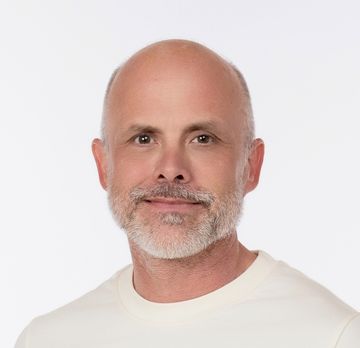
Travis Sparks.
- Microsoft Teams2022-23
- Before Sparkry he was Principal Director of Engineering at Microsoft Teams. He led 2,000+ engineers across 300 microservices and six sovereign clouds, cut rollout time in half, and took uptime from about 99% to 99.99% through an Azure Kubernetes migration.
- Amazon A to Z2019-22
- At Amazon he led the 200-person org behind the Amazon A to Z employee app. It grew from 300K to 2M monthly users and from 2.8 to 4.7 stars. That work included a COVID-19 vaccine attestation system shipped in six weeks.
- Amazon Lending2017-19
- He also built the machine-learning credit system behind Amazon Lending. It issued more than $1B in loans in its first year at under 1.5% default.
- GlaxoSmithKline2004-09
- Earlier, at GlaxoSmithKline, he built a $3M FDA-regulated pre-clinical drug development system.
Fifteen-plus years of AI product work.
More about Travis ->How we take AI from pilot to production, in four steps
Read how we work ->- 1Baseline
Measure first
Before we touch anything we measure how the work happens today, in your numbers. Hours per status report. Days per estimate. How many engineers actually use the tool you already bought. Right order of magnitude, not precision. Without a baseline nobody can ever prove it worked.
- 2Gate
Pass your gate
We go through your governance the right way, and the checks run inside your pipeline, where your team can watch them. If a change cannot pass your gate, it does not ship.
- 3Review loop
Close every finding
Separate AI reviewers check the work, each starting fresh and never the agent that wrote it. Findings get fixed and it is reviewed again, until there are zero open P0 and P1 bugs (critical and high severity). Not "pretty good." Zero.
- 4Handover (the exit)
Hand it over
From day one we train your people to run the work without us. By the time we leave, your team owns it.
The step to check us on
Step 2. Anyone can say "approved". Ask us to show you the check running in your pipeline. If we cannot, we have not done step 2.
Ask to see it on a scoping call ->What this is not
- Not a proof of concept.
- Not a deck.
- Not training slides.
- Not a tool license.
- Not a dependency on us.
How engagements start
A scoping conversation, not a proposal. The first four hours are free and exist so both sides can find out whether this is a fit.
If it is, you get two or three written options, small, medium and large, priced in the scoping conversation. If it is not, we say so.
Questions
How much does Sparkry charge?
The rate is shared in the scoping conversation, with written small, medium and large options. The first four hours of scoping are free.
What does "get AI work to green" mean?
The work passes your governance gate, with zero open P0 and P1 findings (critical and high severity).
Does the work run in our accounts or yours?
Yours: your AI accounts, your compute, your GitHub org, and your CI. Sparkry accounts never hold your code or your data.
Do you build proofs of concept?
No. Not a proof of concept. Not a deck. Not training slides.
Which industries do you work in?
Regulated industries such as pharma, healthcare and financial services.
What happens when the engagement ends?
Your team runs the work without us. From day one we train your people to run it, and by the time we leave, your team owns it.
How is Sparkry different from a big consultancy?
Travis Sparks runs every engagement and does the work himself with AI agents, and all delivery runs inside your organization: your AI accounts, your compute, your GitHub org, and your CI. Pick a big firm when you need many people across many workstreams at once, or a brand your board asks for. Pick Sparkry when one AI system has to reach production under your governance, and you want the person you met doing the work.